
E-Bikes, Scooters and your Park Rules
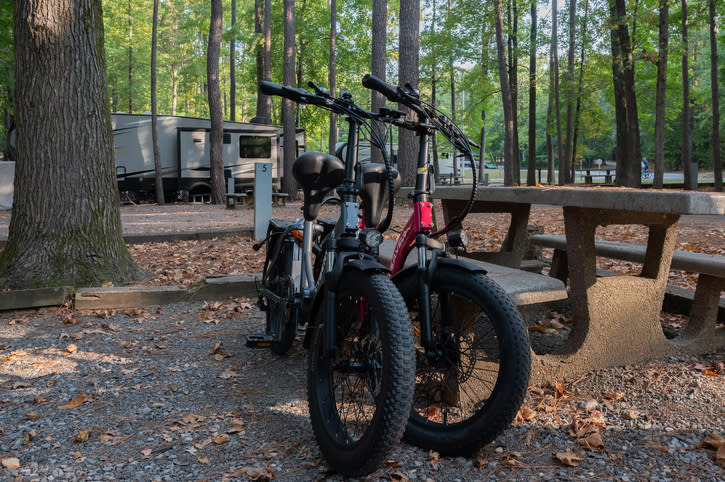
E-Bikes, Scooters and your Park Rules
What California RV Parks and Campgrounds Need to Know
Not Every Electric Bike Is Legally an E-Bike
Under California law, an electric bicycle must have fully operable pedals and a motor that does not exceed 750 watts. E-bikes are divided into three classes:
- Class 1 provides motor assistance only while the rider is pedaling and stops assisting at 20 mph.
- Class 2 may use a throttle without pedaling, but motor assistance stops at 20 mph.
- Class 3 provides assistance while the rider is pedaling and stops assisting at 28 mph.
Class 3 riders must be at least 16 years old and wear a helmet. Riders under 18 must wear a helmet when operating any class of e-bike.
An electric two-wheeled vehicle that exceeds these speed or power limits, lacks operable pedals or has been modified to travel faster may no longer qualify as an e-bike. It may instead be considered a moped or motorcycle, triggering additional licensing, registration and insurance requirements.
The California Attorney General has specifically warned consumers about vehicles marketed as e-bikes that are actually high-speed electric motorcycles. Parks may want to prohibit modified, unlabeled or noncompliant devices unless they are legally registered and operated by a properly licensed rider.
Motorized Scooters Follow Different Rules
California defines a motorized scooter as a two-wheeled device with handlebars, a floorboard designed to be stood upon and an electric or other motor.
On public roads, motorized scooter operators must:
- Possess a valid driver’s license or instruction permit
- Wear a properly fitted helmet if under age 18
- Ride without passengers
- Keep at least one hand on the handlebars
- Stay off sidewalks except when entering or leaving adjacent property
- Not exceed 15 mph
- Use required lights and reflectors when riding after dark
These requirements apply to operation on public streets and highways. Because campground roads and pathways are often privately owned, the application of particular Vehicle Code provisions may vary. That makes well-written park rules especially important.
Parks May Establish Their Own Safety Rules
A privately operated campground generally has the authority to establish reasonable rules governing recreational equipment and vehicle use on its property. A park does not have to allow a device to travel at its maximum legal speed simply because state law permits that speed elsewhere.
For example, a campground may establish a park-wide speed limit of 5 or 10 mph for e-bikes and scooters. It may also restrict their use to designated roads and prohibit riding on sidewalks, pedestrian paths, playgrounds, pool decks, landscaped areas or other congested locations.
Rules should clearly address:
- Which classes of e-bikes and types of scooters are permitted
- The maximum operating speed within the park
- Minimum rider ages
- Helmet requirements
- Whether passengers are allowed
- Areas where riding is permitted or prohibited
- Hours of operation
- Lights or reflective equipment required after dark
- Safe parking and storage
- Battery charging requirements
- Prohibition of racing, stunt riding and reckless operation
- Consequences for violations
- Parent or guardian responsibility for minors
Even when state law does not require helmets for every adult rider, a park may consider requiring helmets for everyone. A universal rule is easier for staff to explain and enforce, particularly when employees cannot readily determine a rider’s age or the class of an e-bike.
Address Battery Charging
Lithium-ion batteries introduce another concern. Damaged, modified, overheated or incompatible batteries and chargers can create a fire risk.
Park policies may require guests to use only manufacturer-approved batteries and charging equipment. Charging should be prohibited in common areas, pathways, restrooms or any location where cords create a hazard. Parks may also prohibit charging damaged batteries, unattended overnight charging or connecting chargers to electrical sources not approved for guest use.
Staff should know how to respond if a battery becomes unusually hot, swells, emits an odor, makes unusual sounds or begins smoking. A smoking or burning lithium-ion battery is an emergency and should not be handled like an ordinary electrical problem.
Remember the ADA
Parks must distinguish recreational use from disability-related mobility use. Under the Americans with Disabilities Act, businesses must generally permit wheelchairs and manually powered mobility aids wherever members of the public are allowed.
Other power-driven mobility devices may also need to be permitted when used by a person with a mobility disability unless the park determines that the particular device cannot be operated safely in that area. That determination must be based on actual factors such as the device’s size, weight and speed; pedestrian traffic; the property’s design; and legitimate safety risks—not assumptions about a person’s disability.
A park may ask for credible assurance that a device is required because of a disability, but staff should not ask about the nature or extent of the disability. ADA-related exceptions should be included in the park’s written policy and staff training.
Communication and Consistent Enforcement Matter
Rules are most effective when guests receive them before a problem occurs. Include the policy in reservation confirmations, registration materials, park rules and digital communications. Post signs at entrances and in high-traffic areas, and consider requiring guests to acknowledge the policy during check-in.
Employees should enforce the rules consistently and document serious or repeated violations. Staff should focus on the unsafe conduct—not argue with guests about what a device is called. A staged enforcement approach might include a reminder, a written warning and suspension of riding privileges for continued violations.
E-bikes and scooters can be a positive campground amenity when they are managed thoughtfully. Clear expectations, appropriate speed limits, designated riding areas and consistent enforcement can help parks accommodate these increasingly popular devices while protecting pedestrians, riders and the park itself.
This article provides general information and is not legal advice. Parks should consult qualified legal counsel and their insurance carrier when developing or revising rules for their individual properties.